India Update · August 2026
MEER team contributes to Urban Heat Symposium in Pune
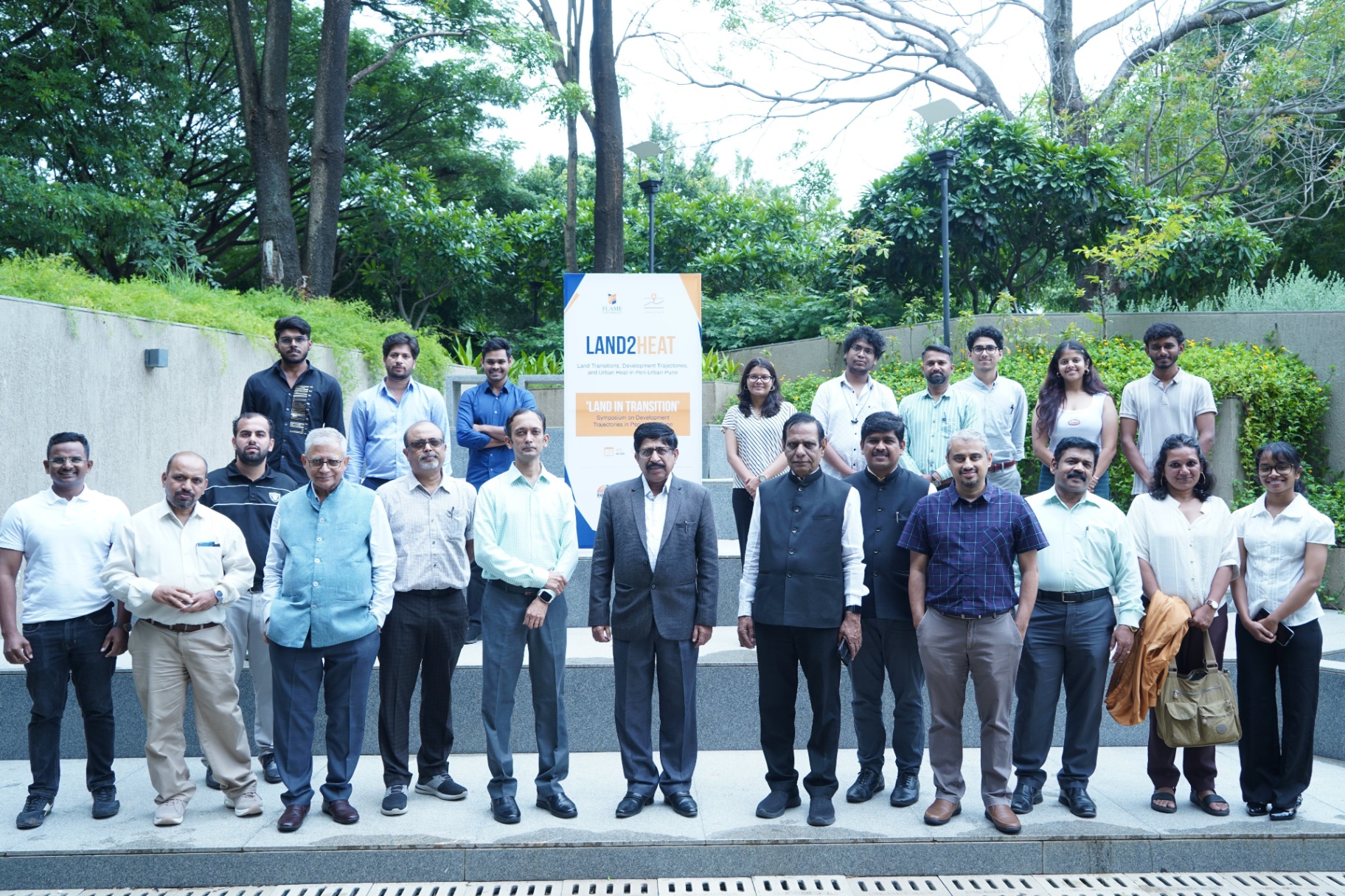
MEER team members in India recently participated in the Land2Heat Symposium at FLAME University in Pune, a one-day event focused on understanding how rapid land-use change is influencing urban heat in the city's expanding peri-urban areas. The symposium formed part of the Land2Heat: Land Transitions, Development Trajectories, and Urban Heat in Peri-Urban Pune research project, led by FLAME University in collaboration with Landstack.
Representing MEER, our team took part in discussions alongside experts from urban planning, land administration, academia, local government, the private sector and civil society. The workshop explored how the rapid transformation of peri-urban land into housing developments, industrial estates, logistics hubs and new infrastructure is affecting both communities and the local environment.
During a panel discussion led by Professor Prasad Pathak, MEER's team shared first-hand insights from our work with heat-vulnerable communities, highlighting the harsh realities faced by people living in extreme heat conditions and the urgent need for practical cooling solutions. The discussion generated considerable interest, with participants asking a range of questions about MEER's research, field experience and approach to addressing heat resilience.
The symposium also provided an excellent opportunity for our team to engage with a diverse range of stakeholders, including representatives from government, real estate, NGOs and academia. These conversations allowed us to share MEER's work while gaining valuable perspectives on the challenges and opportunities associated with peri-urban development in Pune.
Participating in events like this helps strengthen MEER's relationships with researchers, policymakers and practitioners working on urban heat. It also provides an important platform to exchange knowledge, build new collaborations and ensure that practical, community-based solutions remain at the center of discussions on creating more resilient cities.